How to Develop Emotional Intimacy with Your Partner: It is the quiet, steady feeling that your partner truly sees you, understands you, and is on your side. Research shows that 83% of people in relationships say they are satisfied with their relationship overall, which is strongly tied to how loved and emotionally connected they feel.
Key Takeaways
| Question | Short Answer |
|---|---|
| What is emotional intimacy in a relationship? | It is the sense of safety, trust, and emotional closeness where both partners can share their real thoughts and feelings without fear of judgment, similar to the connection we support through guides like Relationship Tips: 7 Proven Secrets. |
| How do we start building emotional intimacy? | Start with honest, gentle conversations, active listening, and small daily check-ins, as we often recommend in our communication exercises for couples. |
| Can we rebuild emotional intimacy after trust is broken? | Yes, but it takes time, transparency, and consistent effort, which we explore in depth in our guide on rebuilding broken trust after infidelity. |
| What role does physical touch play in emotional intimacy? | Physical affection can reinforce emotional closeness when it is respectful and wanted, and it works best alongside emotional openness and shared vulnerability like we describe in 5 Unbreakable Secrets to Building the Best Relationship. |
| How can long-distance couples maintain emotional intimacy? | They can stay close with intentional communication, rituals, and planning visits, as we outline in long-distance relationship tips. |
| What if our communication keeps turning into fights? | Learning healthier conflict skills and boundaries is key, and our guide on healthy relationship boundaries can help you both feel safer opening up. |
How to Develop Emotional Intimacy with Your Partner: Understanding What It Really Means
How to Develop Emotional Intimacy with Your Partner: Emotional intimacy is not just long talks or saying “I love you”, it is the deep sense that your inner world is known, respected, and cared for by your partner.
It shows up in small moments, like when they remember your worries from last week, ask how you really are, or sit with you when you feel low instead of trying to “fix” you immediately.
Core Elements Of Emotional Intimacy
From our experience and research-based guidance, emotional intimacy usually includes:
- Safety: You can share without fear of mockery, dismissal, or punishment.
- Trust: You believe your partner will handle your feelings with care.
- Vulnerability: You both share fears, hopes, and insecurities gradually and honestly.
- Consistency: You feel emotionally supported most of the time, not only on good days.
Emotional intimacy is built through habits, not grand gestures, and couples who treat it as an ongoing practice often report deeper satisfaction and resilience.
In our broader relationships archive, we consistently see that intimacy is a daily process, not a one-time achievement.

2. Start With Safe, Honest Communication
We see again and again that emotional intimacy begins with communication that feels safe for both partners, even when topics are uncomfortable.
Couples often think they have a “communication problem” when what they really have is a “safety problem”, where one or both do not feel emotionally secure enough to share openly.
How To Make Conversations Feel Safe
You can start with small, intentional changes.
- Use “I feel” statements instead of “You always” or “You never”.
- Repeat back what you heard before responding, so your partner feels understood.
- Agree on “no name-calling, no threats, no eye-rolling” as basic respect rules.
- Pause heated talks and schedule a time to return when you are calmer.
Our guide on communication exercises for couples offers practical scripts and step-by-step prompts that many readers use to kick-start more honest, gentle conversations.
Simple Daily Check-in Ritual
One of the easiest ways to build emotional intimacy is a daily 10-minute check-in.
Each day, both of you answer questions like, “What was the hardest part of your day?”, “What are you worried about right now?”, and “How can I support you this week?”.

3. Practice Vulnerability Without Overwhelm
Vulnerability is the heart of emotional intimacy, yet many of us learned to hide our true feelings to avoid conflict, rejection, or shame.
We do not need to force big confessions all at once; instead, we can build a slow, steady habit of sharing a little more of our inner world over time.
Healthy Vulnerability Looks Like This
Instead of dumping everything at once or keeping a wall up, aim for balanced openness.
- Share feelings, not just facts: “I felt embarrassed in that moment” rather than only describing events.
- Admit needs: “I realize I need more reassurance when we are distant” instead of pretending you are fine.
- Own your part: “I shut down when I feel criticized, and I am working on that”.
Our article on building the best relationship explains how vulnerability paired with mutual respect becomes a major source of strength, not weakness.
Using Gentle Prompts To Go Deeper
If opening up feels awkward, use structured prompts once a week.
Each of you can answer questions such as, “What is one fear you rarely talk about?”, “What did you need as a child that you did not always get?”, or “What makes you feel most loved by me?”.

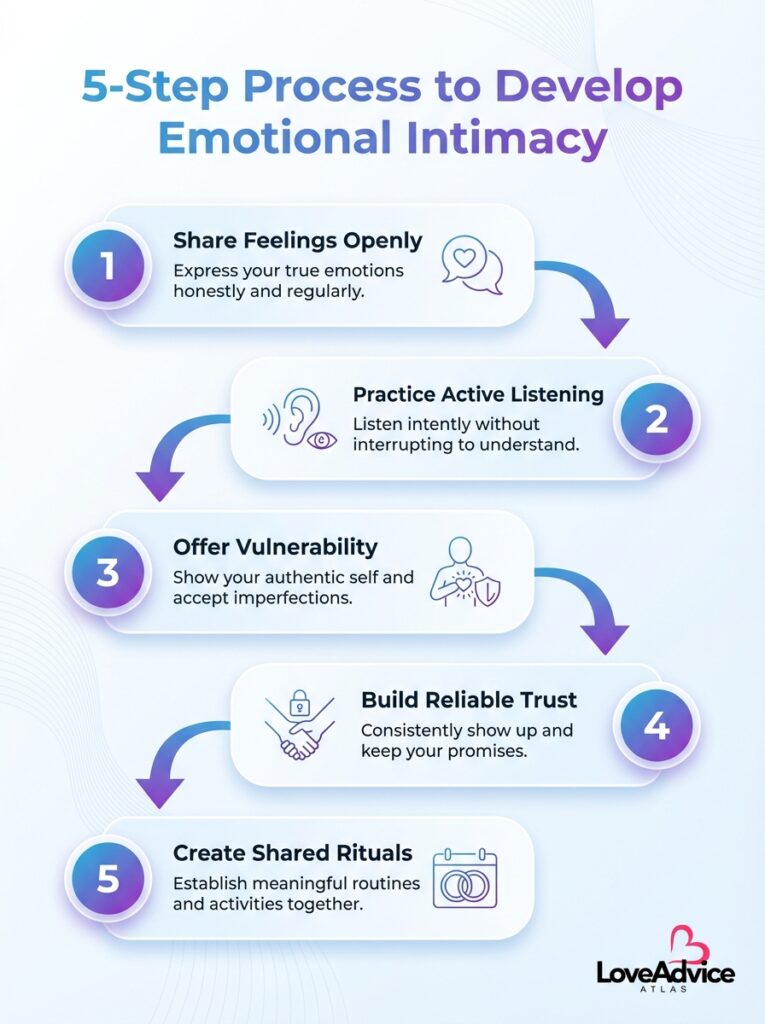
A practical 5-step framework to build emotional intimacy with your partner. Learn actionable steps to deepen trust, connection, and closeness.
Did You Know?
72% of couples in a serious relationship say they rely on physical affection, quality time, thoughtful communication, and shared new experiences as key ways to nurture intimacy.
4. Build Emotional Intimacy Through Quality Time And Shared Experiences
Emotional intimacy grows when you share meaningful time together, not only when you talk about problems.
In our work, couples who protect even small pockets of undistracted time each week usually feel more connected and less resentful.
Quality Time That Actually Deepens Connection
Not all time together is equal, and scrolling beside each other does not give your nervous systems the sense of “we” they crave.
- Plan weekly “no-phones” time, even if it is only 20 minutes, where you talk or enjoy an activity.
- Try new experiences together, like a cooking class, hiking route, or book you both read.
- Revisit early relationship rituals, such as slow walks, shared playlists, or inside jokes.
We explore these ideas further in our relationship tips guide, where novelty and shared experiences are presented as core habits that keep intimacy alive long term.
Long-Distance And Emotional Intimacy
For long-distance couples, emotional intimacy relies heavily on creativity with time and communication.
Our piece on long-distance relationship tips suggests rituals like scheduled video dates, watching the same show, or cooking the same recipe while on a call so you still create shared memories.

5. Use Appreciation And Kindness To Create Emotional Safety
Emotional intimacy cannot grow in a climate of constant criticism, sarcasm, or taking each other for granted.
Small, sincere appreciation acts like daily emotional nourishment, reminding your partner they are valued and seen.
Everyday Appreciation Habits
We encourage couples to treat appreciation as a daily practice, not a rare event.
- Say “thank you” for ordinary acts, like cooking, driving, or emotional support.
- Notice character traits, not just actions: “I love how thoughtful you are with my family”.
- Keep a shared or private “gratitude list” where you record things you appreciated that day.
These habits appear in our 7 proven secrets piece as one of the most reliable ways to re-ignite warmth in relationships that feel distant or tense.
Acts Of Kindness That Deepen Intimacy
Kindness is not just “being nice”, it is the consistent choice to treat your partner gently, especially when they are struggling.
Simple gestures, like making their morning drink, sending a supportive text before a tough meeting, or taking over a chore when they are exhausted, communicate, “You are not alone, and your well-being matters to me”.

6. Nurture Emotional And Physical Intimacy Together
Emotional and physical intimacy are closely connected, and many couples feel closest when both are nurtured side by side.
While every couple has a different comfort level and pace, we consistently see that couples who talk openly about both emotional and physical needs develop a more secure, satisfying bond.
Talking Honestly About Physical Affection
Instead of guessing what your partner wants, have gentle, non-blaming conversations about how you each experience physical and emotional closeness.
- Ask, “What types of touch feel most comforting or connecting to you?”.
- Share what helps you feel safe before or after physical intimacy, such as cuddling or talking.
- Respect differences in libido or comfort, and look for a creative middle ground, not pressure.
Our content in the marriage archive often highlights that couples who see physical intimacy as a shared conversation, not a duty or test, report more closeness and less resentment.
Creating A Comforting Emotional Environment
Simple steps like dimming lights, leaving phones in another room, or checking in emotionally before physical closeness can help both partners feel more present and safe.
When emotional intimacy is prioritized, many couples naturally find that physical intimacy feels more relaxed, connected, and satisfying.


Did You Know?
74% of U.S. adults say they would be extremely or very likely to turn to their spouse or partner for emotional support, showing how central emotional intimacy is in everyday life.
7. Resolve Conflicts In Ways That Protect Intimacy
Conflict is not the enemy of emotional intimacy, but unresolved or hurtful conflict can erode safety and trust over time.
We see couples grow closer when they treat disagreements as shared problems to solve, not battles to win.
Fair-Fighting Rules That Support Emotional Connection
Creating and respecting a few non-negotiable rules can protect your bond during tough conversations.
- No name-calling, insults, threats, or bringing up past resolved issues as weapons.
- Stick to one main topic at a time so both of you feel less overwhelmed.
- Take time-outs when needed, and agree on a specific time to try again.
Our article on how to fix an argument in a relationship walks through practical steps that prevent conflicts from turning into emotional disconnection.
Repairing After A Fight
Emotional intimacy grows when you repair after conflict instead of pretending nothing happened.
Repair can include sincere apologies, clarifying misunderstandings, and asking, “What can I do differently next time so you feel more heard and safe?”

8. Set Healthy Boundaries To Protect Emotional Closeness
Boundaries might sound like distance, but in reality, they protect the emotional space where intimacy can grow safely.
Without boundaries, resentment and burnout often creep in, which slowly shut down openness and vulnerability.
Types Of Boundaries That Support Intimacy
We encourage couples to talk openly about boundaries in these areas.
- Emotional boundaries: How you speak to each other, what is off-limits in conflict.
- Time boundaries: Balancing individual time, couple time, and obligations.
- Digital boundaries: Phone use at meals or in bed, privacy around devices.
Our guide to healthy relationship boundaries explains how clear limits actually increase trust, respect, and emotional safety.
Respecting Each Other’s Inner World
Emotional intimacy does not mean sharing absolutely everything or reading each other’s minds.
It means both of you feel free to express what you want to share, while also respecting the right to process some feelings privately when needed.
9. Rebuild Emotional Intimacy After Broken Trust Or Disconnection
When trust has been broken or disconnection has gone on for a long time, emotional intimacy can feel out of reach.
We have seen many couples slowly rebuild closeness through consistent honesty, accountability, and small daily changes, although this is never instant or guaranteed.
If There Has Been Betrayal Or Deep Hurt
In cases of infidelity or serious betrayal, rebuilding trust involves both partners committing to a clear healing process.
- The partner who broke trust offers full transparency and reliable follow-through.
- The hurt partner is allowed to ask questions and express pain without being rushed.
- Both of you consider individual or couples therapy for extra support.
Our resource on rebuilding after broken trust outlines specific steps couples can use to begin repairing emotional safety.
When You Just Drifted Apart
Sometimes there is no single betrayal, just years of stress, kids, work, or avoidance slowly pushing you apart.
You can start by naming the disconnection gently, like, “I miss feeling close to you, and I would like us to work together on reconnecting”, then choosing one or two intimacy-building habits to practice each week.

10. When To Consider Professional Support For Emotional Intimacy
Some patterns are hard to change on your own, especially if there is a history of trauma, emotional abuse, or long-standing resentment.
In those cases, a trained couples therapist or counselor can offer a structured space to practice new ways of relating.
Signs You Might Benefit From Counseling
We often suggest considering professional support if:
- Most conversations about feelings turn into arguments or shut down.
- One or both of you feel scared to bring up certain topics.
- You repeat the same painful pattern despite many talks and promises.
- There has been infidelity, addiction, or emotional abuse.
Our guide on relationship counseling and couples therapy explains what to expect, how to choose a therapist, and how to talk to your partner about trying therapy together.
Taking Care Of Yourself Alongside The Relationship
Emotional intimacy with a partner is easier when you also take your own mental health seriously.
Individual therapy, journaling, support groups, or trusted friends can help you process your emotions so you are not relying on your partner as your only outlet.

Conclusion
Developing emotional intimacy with your partner is not about being perfect or never fighting, it is about creating a relationship where both of you feel safe, seen, and valued most of the time.
Through honest communication, gentle vulnerability, shared experiences, healthy boundaries, and repair after conflict, you can steadily build the kind of emotional closeness that carries you through both ordinary days and difficult seasons.
As you start or deepen this work, we are here to support you with practical, compassionate resources across our relationship, marriage, dating, and healing guides, so you do not have to figure it all out alone.