

Most powerful way to get attention: as we navigate the hyper-connected landscape of 2026, we have discovered that noise is no longer the most effective way to be heard. Recent data from 2025 indicates that 92% of mobile users watch video content without sound, proving that visual and intentional silence is now the primary method for maintaining modern engagement.
Key Takeaways
| Benefit | Strategic Outcome |
|---|---|
| Increased Authority | Silence signals confidence and high status in social and professional settings. |
| Enhanced Reflection | Pausing allows others to cognitively process and value your contributions. |
| Emotional Rebalance | The no-contact rule creates space for clarity after intense conflicts. |
| Mystery and Pull | Withholding immediate responses builds curiosity and long-term interest. |
Frequently Asked Questions About Silence
How long should a pause be to command attention?
In 2026, research suggests a pause of at least three seconds is necessary to shift the energy of a conversation. This duration forces the other person to reflect on what was just said.
Does silence work during a breakup?
Yes, implementing the no-contact rule to get your ex back is a widely recognized strategy. It focuses on personal growth while allowing the other party to feel the weight of your absence.
Why is silence more powerful than arguing?
Arguing often triggers defensive responses. Silence removes the fuel from a conflict, making your eventual words carry significantly more weight.
Most Powerful Way to Get Attention: Why Silence Commands Influence in 2026
We believe that silence acts as a vacuum in social interactions. When we choose to remain quiet, we create a space that others feel a natural urge to fill with information or attention.
This psychological pull is a core component of high-level social dynamics. By mastering the art of the pause, we demonstrate that we are not desperate for validation or immediate feedback.
In our experience, those who speak the least are often perceived as the most knowledgeable. We observe this trend consistently in modern relationships where deliberate listening outweighs constant chatter.
True intimacy requires moments of quiet shared presence. We find that couples who can sit in silence together report higher levels of long-term satisfaction than those who feel forced to fill every moment.
Why the No-Contact Rule is a Psychological Power Play
We often discuss how the absence of communication can be more communicative than a long explanation. When a relationship reaches a breaking point, the breakup process often involves a frantic attempt to fix things through words.
However, we recommend the use of silence to reset the emotional baseline. By stepping away, we allow the other person to experience the reality of a life without our presence.
This strategy is not about manipulation. We view it as a necessary period of self-preservation that highlights our value through scarcity.

During these periods, silence serves as a loud signal of self-respect. We have seen that this quiet strength often triggers a desire for reconnection from the other party.
Using Strategic Pauses to Command Authority in 2026
In our current professional environment, we find that volume is often mistaken for incompetence. Leaders in 2026 are moving toward a style of communication that prioritizes quality over quantity.
Data from Gitnux in 2026 shows that implementing intentional pause techniques reduces the use of filler words by 50%. This reduction immediately increases the perceived authority and clarity of the speaker.
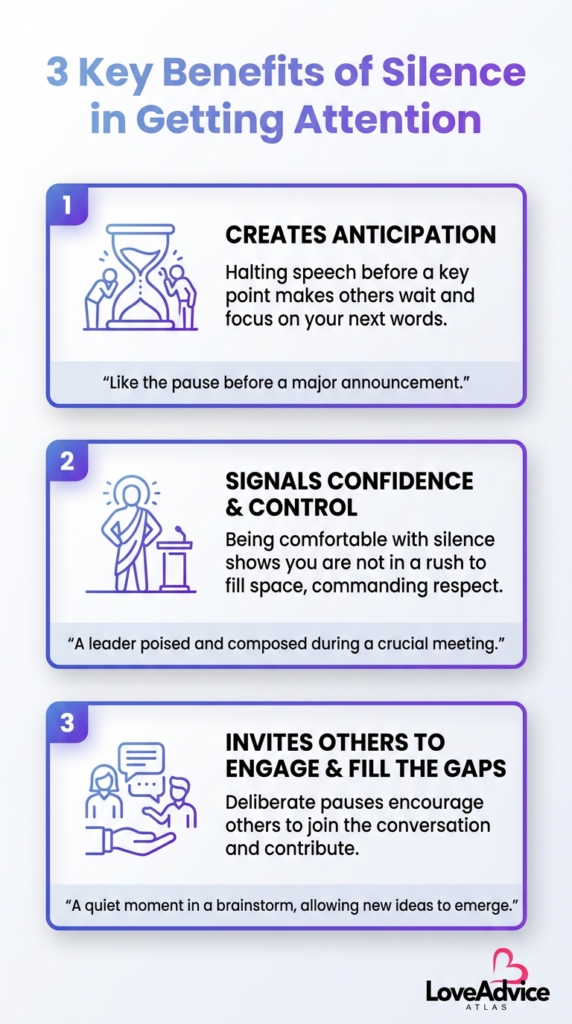
Silence can be a powerful attention magnet. This infographic reveals three ways it boosts your visibility and impact.
We suggest using a three-second pause after asking a critical question. This technique forces the recipient to consider their response more deeply, giving us more control over the interaction.


Our research indicates that the most effective communicators are those who are comfortable with the “uncomfortable” quiet. We believe that this comfort is the ultimate sign of social intelligence.
Silence as a Tool for Healing and Self-Love
We recognize that external silence is often the first step toward internal peace. In our self-love resources, we emphasize the importance of quiet reflection as a way to rebuild confidence.
When we stop seeking constant external noise, we begin to hear our own intuition more clearly. We find that this process is vital for anyone recovering from a difficult life transition.
Did You Know?
Negotiation breakthroughs are more likely to occur immediately following a silent pause of at least 3 seconds than at any other point in the discussion.
By practicing intentional silence, we teach ourselves that we are enough without the constant approval of others. This foundational strength is what eventually attracts healthier partners into our lives.


We believe that silence is the best environment for personal growth. We encourage our readers to set aside time daily for complete stillness to foster this development.
Navigating Dating with Mindful Silence
In the world of modern dating, the urge to over-explain ourselves is strong. We have found that the most successful daters are those who allow the other person to wonder about them.
Using silence during a date can heighten the tension and interest between two people. We observe that a well-timed pause after a compliment is far more effective than a nervous “thank you.”
“The most powerful thing you can do when someone asks a difficult question is to look them in the eye and wait. Silence forces them to reveal their true intentions.”
We recommend treating silence as a partner in your conversation rather than an enemy. When we are comfortable with quiet, we invite the other person to be vulnerable as well.
Our approach centers on the idea that mystery is a form of attraction. We believe that silence is the best way to maintain that mystery over time.
Rebuilding Trust Through Quiet Reflection
When trust is broken in a marriage or long-term partnership, words often fall short. We suggest that both partners utilize periods of silence to process their emotions before attempting to discuss the issues.
Aggressive communication rarely leads to healing. We have observed that quiet, thoughtful actions carry more weight in the restoration process than repeated apologies.
We provide structured communication exercises for couples that incorporate silent listening as a core component. This ensures that each partner feels heard without the distraction of an immediate rebuttal.
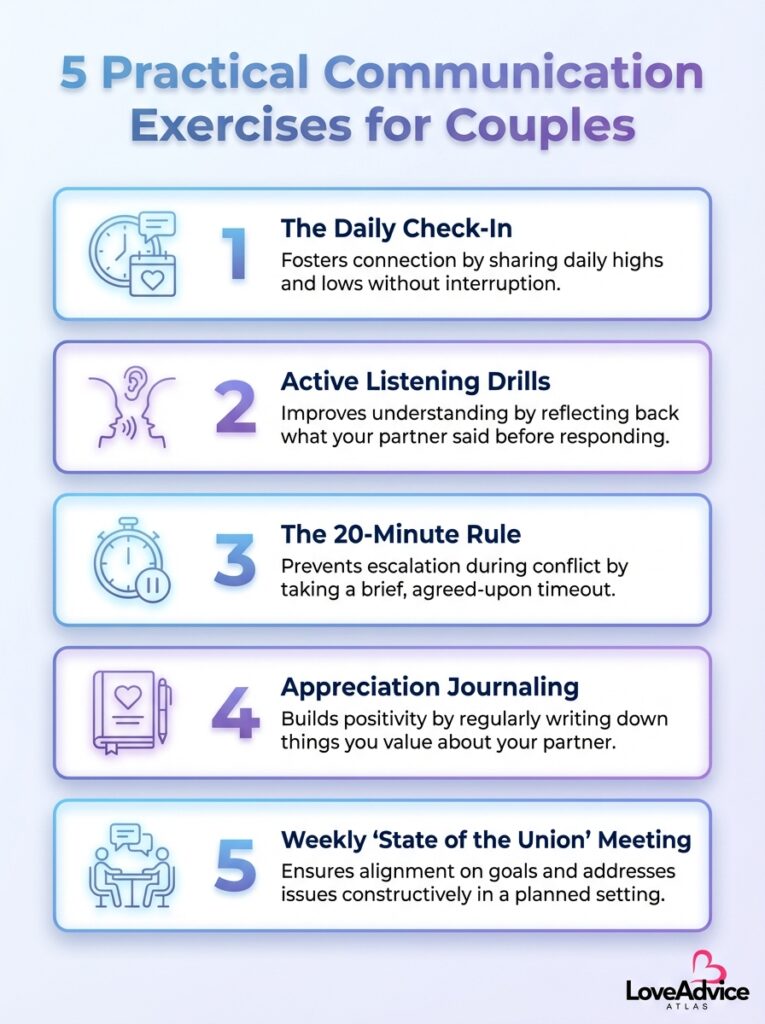

In our experience, the road to rebuilding trust begins with the silence of listening. We believe that actions taken in silence are the most sincere forms of apology.
The Art of Quiet Negotiation in Modern Relationships
Relationships are a constant series of negotiations, from daily chores to long-term goals. We have found that the person most comfortable with silence usually holds the most influence in the outcome.
By not rushing to fill a gap in negotiation, we signal that our position is firm. This allows the other person to reflect on the fairness of the situation.
Did You Know?
Speakers who use extended silence (3+ seconds) are perceived as ‘wise beyond their years’ and perform substantively better in professional assessments.
We advocate for the “pause before response” method in all sensitive discussions. We find that this practice prevents reactionary statements that could damage the connection.

Quiet negotiation is about patience. We believe that being the first to break a silence can sometimes mean being the first to give up your leverage.
Communicating Without Words for Deeper Intimacy
Intimacy is often found in the spaces between words. We emphasize that non-verbal cues, such as eye contact and physical presence, are far more powerful than verbal affirmations.
In our recovery and relationship maintenance guides, we discuss how “silent intimacy” can heal wounds that talk therapy cannot touch.
We find that when we stop talking, we start feeling. This emotional connection is the bedrock of any successful long-term partnership.
We believe that a partner who understands your silence is more valuable than one who only knows your words. We encourage couples to practice “shared quiet” as a daily ritual.
Dealing with Conflict Using the Power of a Pause
Conflict is inevitable, but escalating it is a choice. We have discovered that the most effective way to de-escalate an argument is to stop participating in the noise.
When one person stops shouting and begins to listen in silence, the dynamic changes instantly. We find that this silence forces the other person to confront their own behavior.
- Take a five-second breath before answering a criticism.
- Listen without planning your rebuttal.
- Use physical stillness to project calm.
- Wait until the emotional peak has passed before speaking.
We believe that silence is a shield that protects us from saying things we might later regret. We view it as the ultimate tool for emotional regulation.
By choosing silence in a moment of anger, we maintain our dignity and our power. We have seen that this approach consistently leads to more productive resolutions.
Cultivating Personal Presence in a Noisy World
Ultimately, silence is about presence. In 2026, where everyone is fighting for attention through volume, the quiet person stands out as a beacon of stability.
We encourage our readers to master silence not as a trick, but as a lifestyle. This mastery allows us to command attention without ever having to ask for it.
We find that those who are comfortable with their own silence are the ones who truly own the room. This confidence is what we aim to build in every person we work with.
When we stop trying to get attention, we finally start receiving it. We believe that silence is the most powerful signal we can send to the world.
Conclusion
In summary, we have established that silence is far from being a passive state. It is a strategic, powerful tool that commands respect, builds attraction, and fosters deep emotional intelligence in both our personal and professional lives.
Whether you are implementing the no-contact rule after a breakup or using a three-second pause in a high-stakes negotiation, the results in 2026 remain the same. By choosing to say less, you ensure that what you do say is heard with the maximum possible impact.