

How to use the no contact rule effectively can make a significant difference in your chances of healing and even reconnection. Did you know that 90.7% of dumpers eventually reach out in some capacity if the partner who was left maintains a true, uninterrupted period of No Contact for over six months? We have observed that this period of silence often acts as the catalyst for curiosity and regret, providing the necessary space for both parties to gain perspective.
Key Takeaways
| Strategy Component | Actionable Insight |
|---|---|
| Core Purpose | Focus on personal recovery and healing using our No Contact Rule Guide. |
| Initial Steps | Cut off all digital and physical ties immediately as outlined in our Getting Over Someone Guide. |
| Healing Focus | Prioritize emotional stability through self-love practices and reflection. |
| Long-term Outlook | View separation as a time for breakup growth rather than just waiting. |
| Support Access | Connect with us for a coaching inquiry to navigate your specific situation. |
What is the No Contact Rule? It is a structured period where you cease all communication with an ex to facilitate healing and clarity.
Does the No Contact Rule work for reconnection? Yes, we find it increases the likelihood of a healthy reconnection by removing emotional flooding and allowing for genuine missing.
What is the No Contact Rule and How Does it Work?
We define the No Contact Rule as a structured, psychologically grounded method for self-preservation and recovery. It is not a manipulative tactic, but rather a boundary that allows the initial pain of a breakup to settle.
During this period, you must avoid all forms of outreach, including text messages, social media interactions, and accidental run-ins. This silence provides the space necessary to break the cycle of dependency and emotional chaos that typically follows a separation.

The Psychological Rationale Behind Choosing Silence
Our research indicates that silence triggers a shift in the dumper’s perception of the relationship. When you remain available, the other person often feels a sense of relief and control, which prevents them from feeling the true weight of your absence.
By implementing No Contact, you introduce the element of loss, which is essential for any potential reconnection. This psychological reset allows both individuals to move past the immediate resentment and focus on the fundamental reasons they were originally compatible.

How to use the no contact rule: Determining the Ideal Timeline for Reconnection in 2026
We suggest that most successful reconnections occur after a period ranging from 30 to 90 days. Short periods of 30 days are often sufficient for minor disagreements, whereas 90 days or more are necessary for long-term partnerships that ended in significant conflict.
The 2026 dating landscape requires a patient approach, as digital fatigue makes rapid reconciliation less effective. We advise sticking to your chosen timeline strictly to ensure that the changes you make are permanent and not just temporary responses to loneliness.
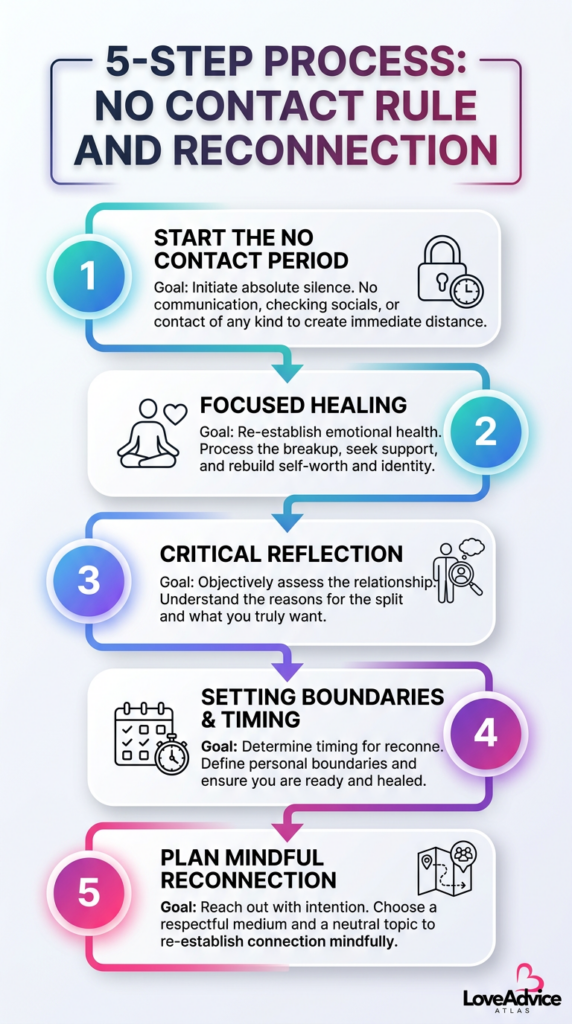
This visual guide outlines a practical 5-step No Contact Rule and how to approach reconnection. It highlights timing, communication, and safe strategies for rebuilding connection.

Using Distance to Foster Personal Growth and Readiness
We emphasize that the “No Contact” phase is an active period of growth, not a passive waiting game. It is the perfect time to explore your own needs and determine if the relationship was truly serving your best interests. If you find yourself struggling with the urge to reach out, we recommend engaging in new activities or rekindling old hobbies. This personal evolution makes you a more attractive and stable partner should a reconnection opportunity arise in the future.
Did You Know?
27.2% of couples successfully get back together after a breakup.
Crafting the Perfect Outreach Message After No Contact
When the period of silence concludes, your first message should be low-pressure and focused on a neutral topic. We advise against bringing up the breakup, past grievances, or heavy emotional subjects in the initial text.
A “ping” message that references a pleasant shared memory or a casual question works best to test the waters. We suggest keeping the conversation light and brief to gauge their current level of interest and emotional availability.
How to Respond When Your Ex Reaches Out First
If your ex-partner initiates contact during or after the No Contact period, we recommend maintaining a polite and centered tone. Avoid appearing overly eager or resentful, as both extremes can derail the potential for a healthy reconnection.
Take your time to respond rather than replying instantly to demonstrate that you have built a life independent of their validation. This composed approach shows that you have utilized the time apart for meaningful self-reflection and growth.
Guidelines for Responding
- Wait at least two to four hours before sending a reply.
- Keep the tone friendly but slightly detached to maintain your boundaries.
- Answer their specific question without offering unsolicited information about your life.
- End the conversation first to leave them wanting more interaction.
Essential Communication Exercises for Rebuilding Trust
Reconnection is only the first step in creating a lasting partnership in 2026. We recommend utilizing communication exercises for couples to address the issues that led to the original breakup.
Active listening and nonviolent communication techniques are vital for ensuring that old patterns do not repeat themselves. We have found that couples who dedicate time to these structured exercises have a much higher success rate in their second attempt at the relationship.

Did You Know?
75% of couples who reconcile eventually break up again within one year.
Distinguishing Between a Healthy Relationship and Mere Companionship
As you navigate the reconnection phase, it is crucial to evaluate the depth of your bond. We offer a detailed Relationship vs Companionship Analysis to help you understand if you are seeking a life partner or simply a temporary comfort.
A healthy relationship involves shared goals and deep intimacy, while companionship may be based more on convenience or fear of being alone. We encourage you to be honest with yourself about which path you are pursuing to avoid future heartache.
Comparison Table: Relationship vs Companionship
| Feature | True Relationship | Simple Companionship |
|---|---|---|
| Level of Commitment | High, long-term focus | Situational, short-term focus |
| Conflict Resolution | Collaborative growth | Avoidance or surface-level fixes |
| Shared Vision | Aligned core values | Aligned current interests |
Common Mistakes to Avoid During the Reconnection Phase
We often see individuals ruin their progress by rushing into heavy conversations too quickly. It is essential to treat the reconnection as a brand-new dating experience rather than picking up exactly where you left off.
Avoid the “friend zone” by maintaining clear romantic intent while still respecting boundaries. We suggest avoiding excessive checking of their social media or asking friends about their private life, as this behavior often leads to unnecessary anxiety and pressure.
Recognizing When Reconnection is No Longer the Best Path
Sometimes, the No Contact period reveals that moving forward is healthier than looking back. We support your decision to pivot toward new dating experiences if you realize the fundamental issues remain unaddressed.
If the other person remains toxic or unwilling to participate in healthy marital or partnership dynamics, it is time to prioritize your well-being. We also provide resources for navigating more complex endings, such as divorce guidance, to ensure you have support at every stage.
Conclusion
The No Contact Rule is a powerful instrument for both individual healing and potential reconnection. By choosing silence, you allow for the emotional dust to settle and for genuine reflection to occur for both parties in 2026.
We have seen that those who prioritize their own growth during this time are the most likely to succeed, whether they rekindle their old flame or find a new, healthier partnership. Always remember that your value is not defined by the outreach of another person, but by the strength you find within yourself.